How can real estate stakeholders apply European Taxonomy (EUT) alignment criteria across different European markets? While the EU Taxonomy establishes a common European framework for sustainable economic activities, its practical application can vary significantly depending on national contexts.
To address this challenge, the European Sustainable Real Estate Initiative (ESREI), led by the Observatoire de l’Immobilier Durable (OID), brought together real estate professionals and European experts in a dedicated Working Group.
Following six months of collaborative research, two complementary resources have been published: a comparative guidance and an interactive tool, covering seven European real estate countries.
This project illustrates the value of collaboration and knowledge-sharing in addressing common sustainability challenges across borders.
The context for a working group on the EU Taxonomy
Although the EU Taxonomy provides a common European framework, its criteria are applied differently across countries due to varying national regulations, methodologies and market practices. This lack of harmonisation makes it challenging for real estate stakeholders operating across multiple European markets to assess and demonstrate alignment.
How can real estate professionals navigate these differences and develop a more consistent approach to EUT alignment across their portfolios?
This question was at the heart of ESREI’s first Working Group.
Given the activities and priorities of ESREI’s members, the research focused on Taxonomy activity 7.7 – Acquisition and ownership of buildings, under the Climate Change Mitigation objective, and covered seven markets: Belgium, Denmark, France, Germany, Italy, the Netherlands and the United Kingdom. Along with regulatory comparison, the goal was to understand how EUT criteria are interpreted and applied in practice, and which types of evidence can be used to demonstrate alignment.
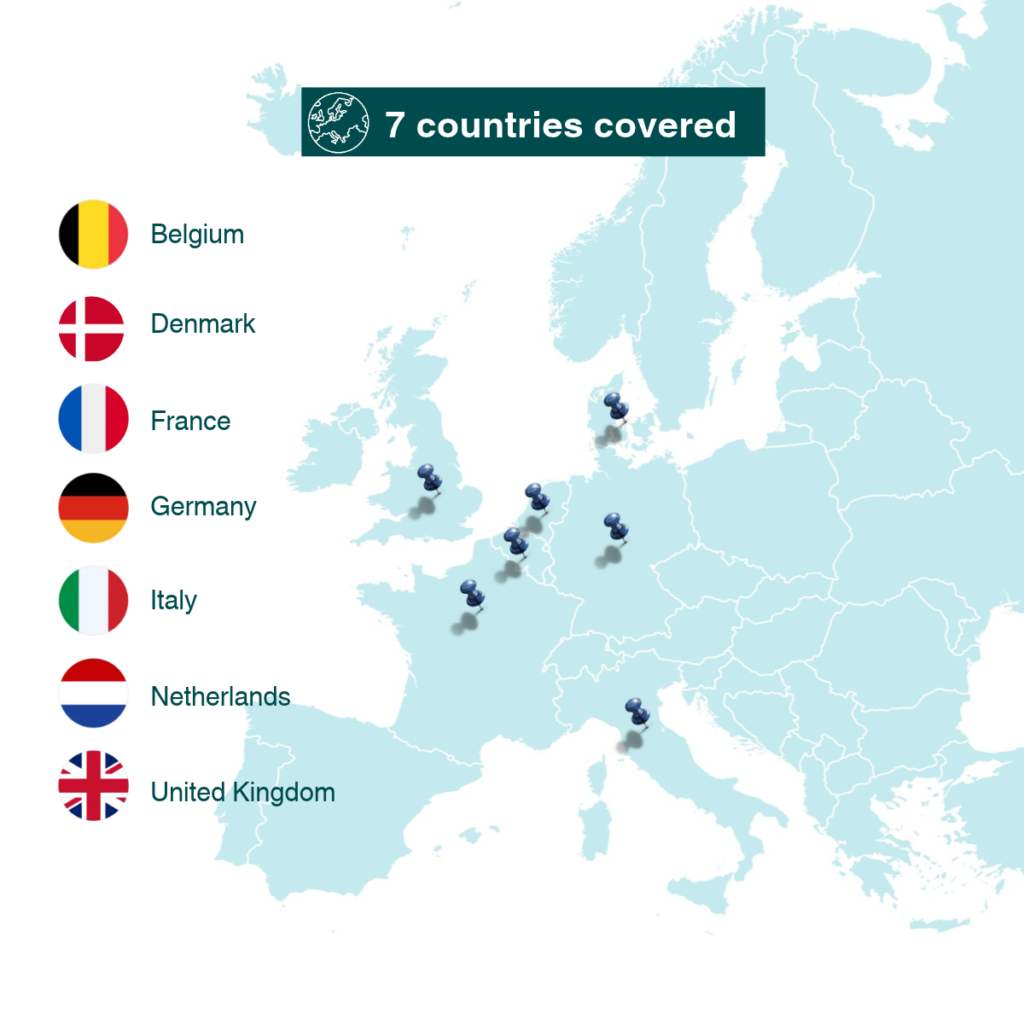
Scope of the study
Two complementary deliverables resulting from the working group
The Working Group’s research resulted in two complementary deliverables, released in September 2026. Both provide information on the application of the EUT criteria across the seven countries studied but address different user needs.
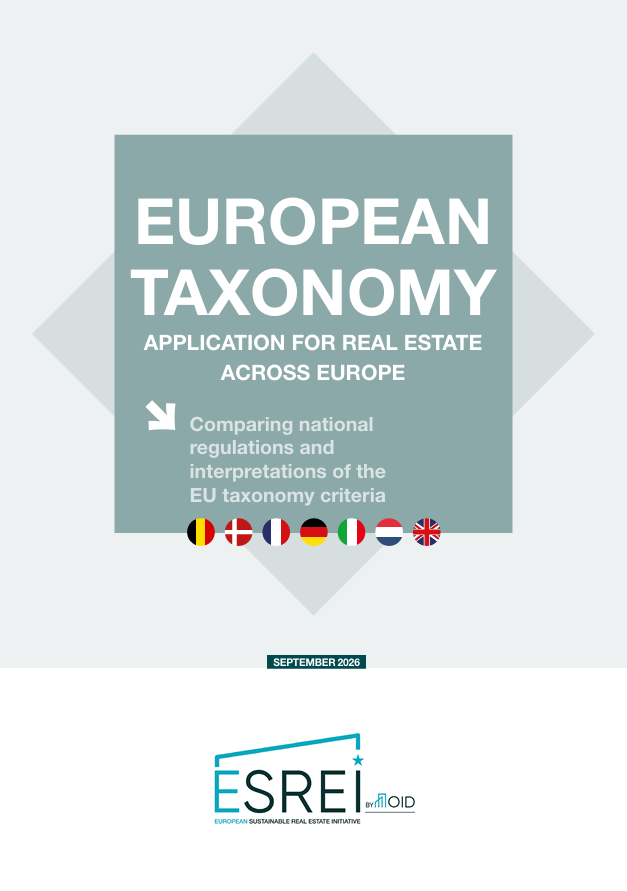
The Taxonomy Guide: comparing national approaches at a glance
The first deliverable is a comparative guide designed to make the information accessible and easy to navigate.
Covering all Substantial Contribution Criteria (SCC) for Climate Change Mitigation and Do Not Significant Harm (DNSH) criteria for Climate Change Adaptation, the guide allows users to quickly identify differences and similarities between countries and provides a practical entry point for professionals seeking a cross-country understanding of specific criteria. For each criteria, it provides a concise overview of national requirements, local interpretations, relevant methodologies and possible supporting evidence across the seven European markets.
The interactive Excel tool: exploring the information in greater detail
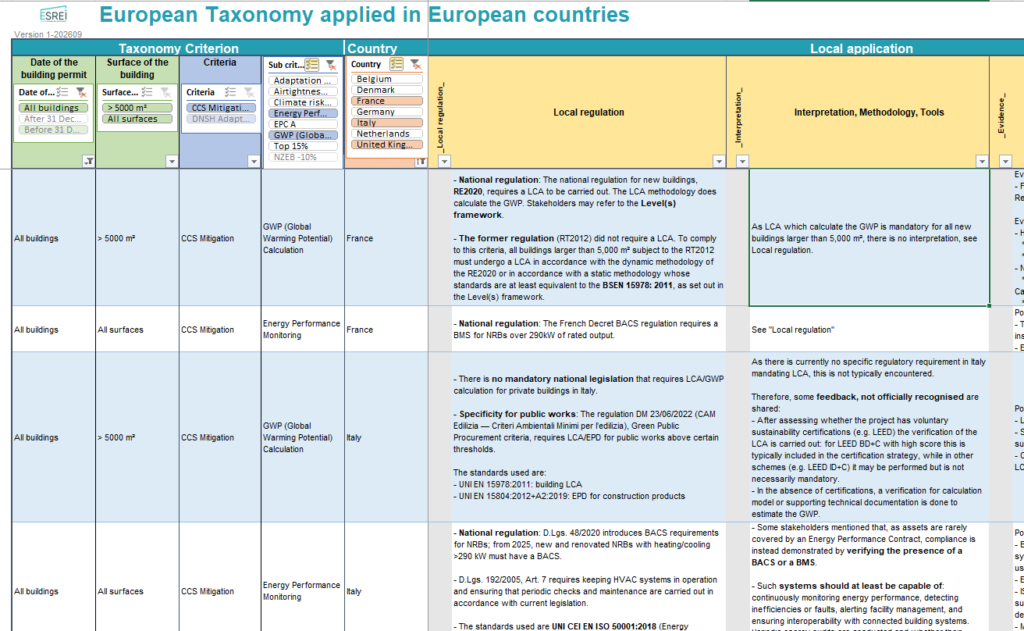
The second deliverable is a more technical and detailed Excel resource.
Designed for users seeking specific information or wanting to have a comparative between a selection of countries, it allows them to explore and display the data according to the criteria and countries relevant to their activities. Also, it provides access to more detailed information gathered throughout the research, complementing the concise analysis presented in the guide.
Together, these two resources offer different levels of reading: a quick comparative overview through the guide, and more detailed exploration through the Excel tool. They can be used independently or together, depending on users’ needs.
General takeaways and example of criteria interpretation
One of the main lessons learned from the Working Group is that common European criteria do not necessarily translate into identical national practices or supporting evidence.
This guidance illustrates that understanding the local regulatory environment and existing building assessment practices can help stakeholders identify relevant documentation and evaluate alignment more effectively. More broadly, it confirms the value of combining three levels of analysis: the European criterion, its national context and its operational application.
To illustrate, the application of the SCC criterion on Global Warming Potential (GWP) reveals different levels of regulatory requirements and methodological approaches. While countries such as France, Denmark and the Netherlands have introduced mandatory life-cycle assessments (LCA) for certain new buildings, others rely more on voluntary frameworks, certifications or market practices. Despite these differences, European standards such as EN 15978 provide a common methodological basis.
The types of evidence available to demonstrate alignment also vary, ranging from mandatory LCA reports to voluntary certifications and technical documentation. More broadly, this cross-country comparison highlights both the challenges of applying common European criteria and opportunities for greater harmonisation in assessment and reporting practices.
A Working Group based on collaboration
One of main ESREI’s goals is to bring together members facing common challenges to exchange experiences, compare practices and jointly develop practical resources for the real estate sector. This Working Group helped strengthened this approach at European level by gathering its members and translate their expertise into shared and operational resources.
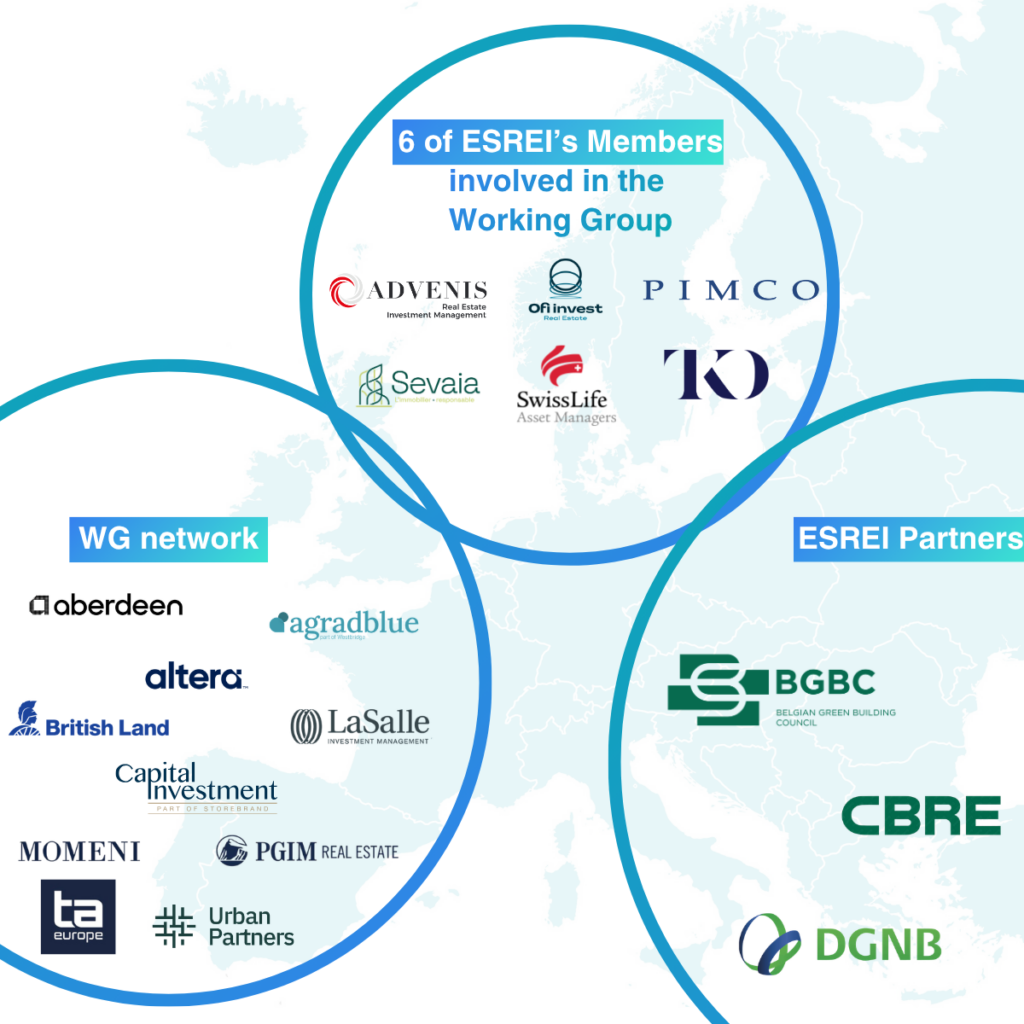
On the EUT, ESREI brought together six of its members: Advenis REIM, OFI Invest, Pimco Prime Real Estate, Sevaia, Swiss Life Asset Managers and Tikehau Capital. Their involvement extended throughout the project, from defining the objectives and scope of the research to shaping its methodology, sharing expertise, collecting feedback and reviewing the final deliverables.
Another key dimension of the project was the mobilisation of the members’ professional networks. Together with ESREI’s partners and wider network, the Working Group integrated 16 contributing companies and organisations from different European countries, bringing complementary local expertise and operational perspectives.
This network-based approach made it possible to gather operational information on the three dimensions for each criterion: national regulations and specificities, interpretations, methodologies and market practices and the possible supporting evidence. This methodology is particularly valuable for European research: rather than relying exclusively on a regulatory analysis, it combines cross-country comparison with knowledge directly collected from professionals working in local markets. The result is a shared understanding built from multiple national perspectives, turning individual expertise into resources that can benefit the wider ESREI community.
This project also reflects ESREI’s broader ambition: to foster cross-border collaboration, exchange best practices and collectively support the environmental transition of European real estate.
Acknowledgements
The EU Taxonomy Guide and interactive Excel tool are available exclusively to ESREI members on the OID’s resource platform.
OID and ESREI would like to warmly thank the six Working Group members — Advenis REIM, OFI Invest, Pimco Prime Real Estate, Sevaia, Swiss Life Asset Managers and Tikehau Capital — for their commitment throughout the project. ESREI also thank the contributors and partners who shared their expertise and helped collect information across European markets, including Momeni, Altera, PGIM, Capital Investment, BGBC, TA Europa, British Land, IPUT, AgradBlue, DGNB, La Française, LaSalle and Aberdeen PLC. Their contributions were essential to making this collective research possible.
To learn more about ESREI and its collaborative activities, visit the ESREI page or contact esrei@o-immobilierdurable.fr.