
ÖGNI – Austrian Sustainable Building Council, is the main actor regarding sustainable real estate and construction in Austria. ÖGNI is a non-profit organisation and is the only Austrian council to be an «established member» of the World Green Building Council.
Founded in 2009, ÖGNI is one of the system partner of the DGNB, the German Sustainable Building Council. The aim of the ÖGNI is to demonstrate the added value of building certification in order to create environmentally friendly and resource-saving buildings with high economic and social efficiency.
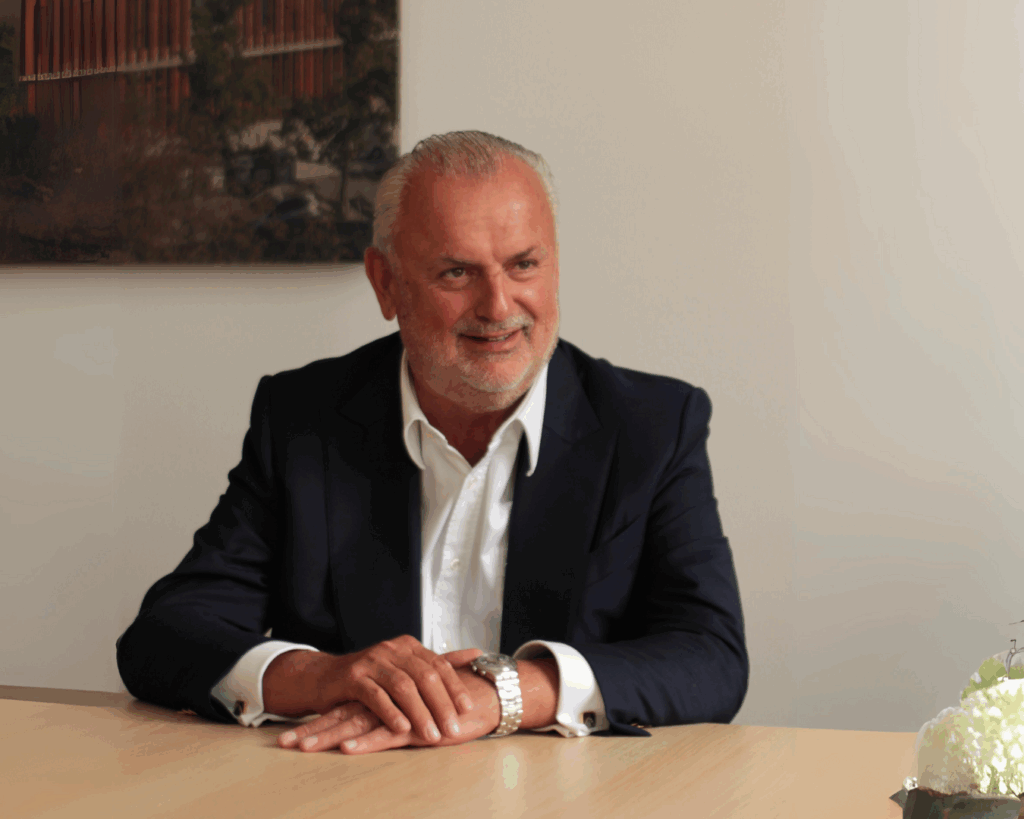
Peter Engert, ÖGNI CEO:
After more than twenty years in the financial sector, Peter Engert has been an independent manager and owner of CORSOR GmbH since 2011, a management consultancy focusing on the implementation of sustainability in everyday business life. In 2017, Peter Engert took over as managing director of ÖGNI. The Austrian Sustainable Building Council is committed to establishing sustainability in the construction and real estate industry. ÖGNI’s goal is to demonstrate the added value of building certification in order to create environmentally friendly and resource-efficient buildings with high economic and social efficiency.
How do you picture the sustainability landscape for real estate in your country? What aspects of ESG dynamics are currently the most integrated? Conversely, which aspects remain the least integrated?
The Austrian sustainability landscape for real estate is mature in awareness and moving from voluntary action to mandatory standards. Many market actors (developers, investors, certifiers, municipalities) already integrate energy performance, energy-efficiency retrofit planning and renewable heating transitions into decisions. Austria’s building sector has strong technical capacity, active certification uptake (DGNB/ÖGNI approaches) and growing product- and material-level disclosure work.
Less integrated are robust lifecycle/embodied-carbon management across the whole value chain and consistent, comparable asset-level sustainability data disclosures for smaller owners. Social aspects (tenant health & wellbeing, affordability trajectories) and systematic integration of true whole-life carbon into financing and valuation remain emerging rather than mainstream.
ÖGNI aims to help close this gap by treating the social component of certification as equally important as the environmental component and by focusing on sufficiency and the social aspect of sustainability with regards to the built environment in its agenda. Another example is the Life Cycle Value Index (LZWi), which was developed by an ÖGNI working group and introduces a holistic metric that includes both operational and material-related emissions over a building’s entire life cycle. LZWi uses a depreciation model to allocate the embodied emissions of existing structures over their remaining useful life, enabling fair comparison between old, renovated, and new buildings.
What are the key regulatory deadlines or developments in 2026 that you are monitoring in relation to sustainable real estate in your country?
We’re of course tracking the transposition of the revised EU Buildings Directive / EPBD into national law. In Austria this happens via the OIB Guidelines. The OIB is Austria’s technical institute that writes the building guidelines used by the federal provinces. When the EU updates the Buildings Directive (EPBD), the OIB updates its energy guideline (OIB Guideline 6) so that Austrian provinces can adopt those new technical rules into their building codes.
That is why the OIB is the decisive link: it transforms EU policy into concrete calculation rules, minimum performance standards, energy-certificate and renovation rules that architects, builders and owners must follow. As of 2025 the OIB’s updated Guideline 6 (2025 edition) has been prepared and published for consultation; the national transposition process is under way with a deadline around May 2026 in line with the EPBD timetable.
What are the key voluntary deadlines or developments in 2026 that you are monitoring in relation to sustainable real estate in your country?
Large-scale / serial renovation is a topic we are highlighting and therefore closely watching. A new draft of Austria’s building renovation plan was published by the OIB in November 2025 – its release follows the timeline set by the European Union. Austria is launching a renewed „Sanierungsoffensive“ (renovation offensive) in 2026 and our national renovation programme ramps up in 2026 with funding and policy measures (Kesseltausch, renovation bonus) intended to accelerate climate-friendly heating changes and energy retrofits. The annual renovation rate in Austria is currently around 1.5% of the housing stock; this is well below the target: an average of 2.8–3.2% per year would be necessary to make the building stock climate-friendly by 2040.
Could you outline the main elements of your events and publications calendar for 2026?
Core topics for ÖGNI in 2026 will be sufficiency, affordable housing, renovation, and learning from the Global South. We recently joined the SHIFT initiative as a partner: this is a global architecture movement that aims to redefine what contemporary architecture should be – climate-responsive and deeply rooted in culture and place. There is a lot the Global North can learn from the Global South in this regard.
There will be online and physical events on a multitude of topics, with working groups, deep dives, and our flagship multi-stakeholder symposium bringing DACH experts together. Last but not least, ÖGNI will shape a Europe-wide partnership on EU-taxonomy verifications together with other European Green Building Councils and partner organisations.
Finally, in your opinion, what are the key trends likely to shape the real estate sector in the coming years?
Of course, political uncertainty at European level does not help and sends unclear signals to the market. Climate change and the transformation of our energy systems are the defining issues – not only because they are reflected in EU regulations, but also because common sense dictates that we should preserve the value of buildings and the quality of life of their residents.
EU level rules (EPBD, sustainability reporting, taxonomy) and their national transpositions will push minimum performance expectations upward – not just for newbuilds but for retrofits and energy systems. We are also seeing a shift from energy-only thinking to whole-life carbon and circularity. Lifecycle approaches (embodied carbon, material reuse) will move from niche to required practice for many projects and financiers; certification schemes will continue to integrate these metrics.
Finally, we hope to see a scale-up of renovation activity driven by national programmes and financing. Public renovation incentives and targeted programmes will increase retrofit volumes – creating demand for standardized renovation passports, staged deep-retrofit workflows and verification.

